
Why AML Templates Are Failing Estate Agents, And What HMRC Actually Expects
The problem with “off-the-shelf” AML policies
Estate agents must have an AML policy and risk assessment in place.
On paper, that sounds reassuring. In practice, it often isn’t.
Many of these documents start as templates. They are downloaded, lightly edited, and reused year after year. They look complete. They tick a box. But they rarely reflect how the business actually operates.
That is where the risk sits.
HMRC does not expect a generic document. It expects a clear, written explanation of the risks your business faces and how you manage them. When that detail is missing, the document stops being protection and becomes exposure.
What HMRC actually expects
Under the Money Laundering Regulations, estate agents must maintain both a business risk assessment and documented policies, controls and procedures.
In practical terms, this means your documentation should show how your business really works.
It should reflect who your customers are, where they are based, and how you interact with them. It should explain the types of transactions you handle and where higher-risk scenarios may arise. It should also set out how your processes deal with those risks in a consistent and controlled way.
A typical AML policy already shows the level of detail expected, from customer due diligence through to audit procedures and ongoing monitoring . The expectation is not just structure. It is relevance.
Templates rarely achieve that.
They cannot capture how your team handles exceptions, how risk varies across your pipeline, or how decisions are made in practice. These are exactly the areas HMRC will focus on during an audit.
Why templates do not stand up
Templates fail for a simple reason. They are not written for your business.
That creates a gap between what is documented and what actually happens day to day. Policies often include broad, generic statements that do not demonstrate real understanding of risk. Processes described in the document may not match how staff actually work. When challenged, there is little detail to support how decisions are made or why certain controls are in place.
From an audit perspective, this is difficult to defend.
You are left explaining a document that was never built around your business in the first place.
A more practical way to build your policy
Creating a compliant AML policy does not need to be complicated. It does need to be specific.
A defensible policy is structured, consistent and grounded in real operational detail. It reflects your client base, your transactions and your processes. It is also something you can update as your business changes, rather than a document that quickly becomes outdated.
The challenge for many agents is time.
Building this properly from scratch can take hours, and it is not always clear what HMRC will expect to see or how much detail is enough. That uncertainty often leads back to templates, even when they are known to be insufficient.
Introducing Risk Navigator
Risk Navigator has been developed to give agents a more structured starting point.
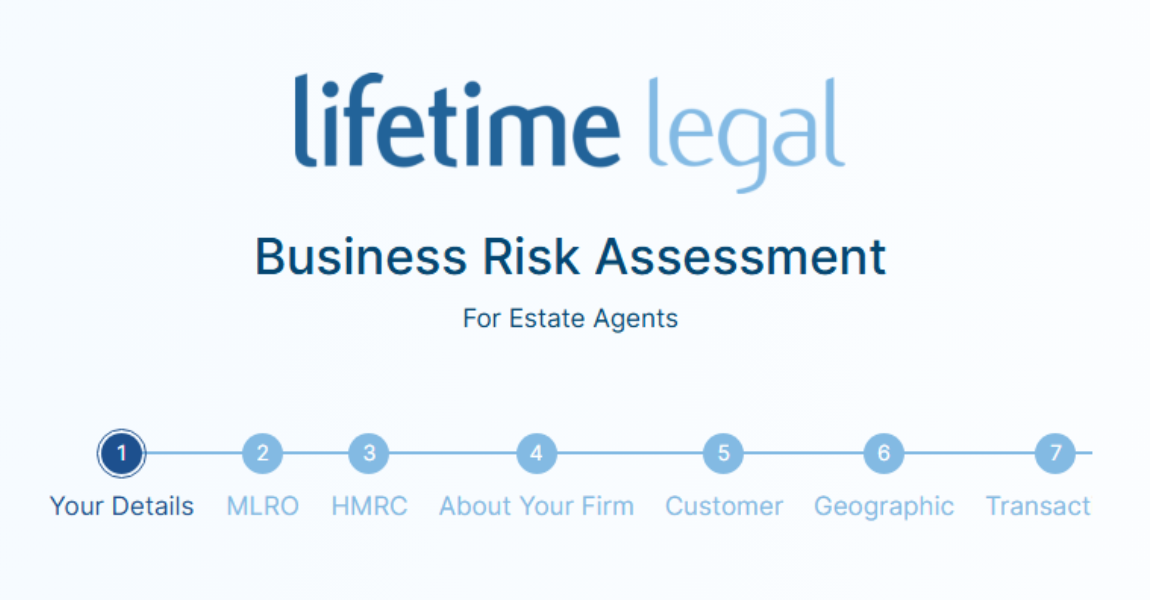
It provides a guided way to build a bespoke Business Policy and Risk Assessment that reflects how your agency operates in practice. Instead of relying on a generic template, you are taken through the key areas HMRC expects to see, with prompts that help you capture relevant detail.
This includes your client profile, the types of transactions you handle, where higher-risk situations may arise, and how your controls address those risks. Once you have your data ready the Navigator takes 20-30 minutes to complete meaning hours saved and cost to the business.
The result is a document that is specific to your business, consistent in structure, and built to support audit readiness.
Importantly, the document remains your own. It reflects your processes and your responsibilities, without external branding.
Why this matters
AML compliance is not optional. It carries real regulatory and reputational risk.
The difference is not whether a document exists. It is whether that document can stand up to scrutiny.
A template may look complete at first glance. A tailored policy shows something more important: that your business understands its risks, has clear controls in place, and can evidence how decisions are made.
That is what reduces risk in practice.
A better starting point for audit readiness
Risk Navigator does not replace your responsibilities. It helps you meet them in a more structured and defensible way.
For estate agents facing increasing scrutiny, that matters.
The question is no longer whether a policy exists.
It is whether it would stand up in an audit.